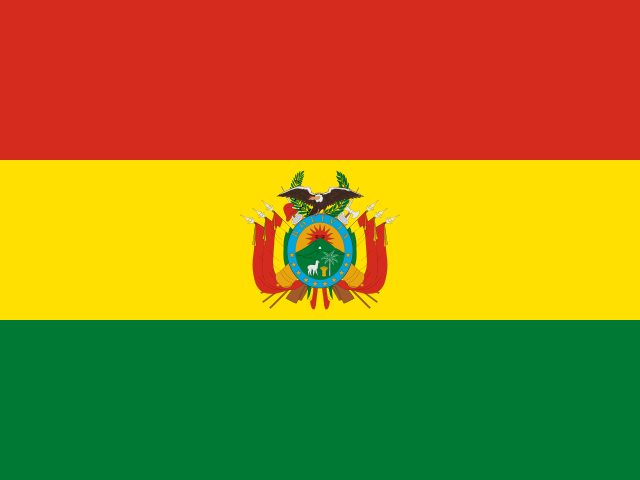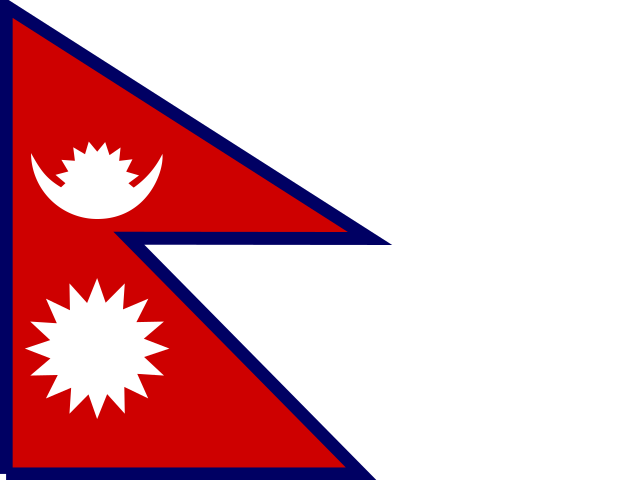
Line up the flags of all 195 countries and one of them refuses to fit in. Every other national flag is a rectangle or, in the case of Switzerland and Vatican City, a square. Nepal’s flag is made of two crimson triangles stacked on top of each other, edged in blue, with a white moon in the upper triangle and a white sun in the lower one. It has five sides, it is taller than it is wide, and it is the only national flag in the world that is not a four-sided shape.
That makes it a favourite trick question in geography quizzes, but the story behind it is more interesting than the trivia. Nepal’s flag is not a modern design trying to be different. It is an old tradition that the country chose to keep.
Where the shape comes from
For centuries, triangular pennants were a common sight across the Himalayan region and much of South Asia. They flew above temples, palaces and armies, and they were easy to carry on a pole or a spear. Nepal’s rulers used pennants like these long before anyone thought of standardising national flags.
Over time, two pennants came to be flown together, one above the other. The double pennant became the symbol of the kingdom. When most of the world’s countries adopted rectangular flags in the 19th and 20th centuries, often copying European models, Nepal kept its own.
Older versions of the flag looked a little different from today’s. The sun and the moon used to have human faces drawn on them, a style found in a lot of traditional art in the region. When Nepal formally standardised the flag in 1962, the faces were removed and the design was simplified into the clean shapes we see now.
What the symbols mean
Nepal’s flag is full of meaning, although different sources explain it in slightly different ways. The two triangles are often said to represent the peaks of the Himalayas, the mountains that define the country’s landscape. They are also linked to Hinduism and Buddhism, the two great religious traditions of Nepal.
The crimson red is the colour of the rhododendron, Nepal’s national flower, and is traditionally a colour of victory and courage. The blue border stands for peace. The moon and the sun express a hope that the nation will last as long as they do. The moon is also linked to the calm character of the Nepali people, and the sun to their strength and determination.
A flag drawn with geometry
What really makes Nepal’s flag unique is how precisely it is defined. Most countries describe their flags with a ratio and a list of colours. Nepal goes much further. Its constitution includes step-by-step instructions for drawing the flag with straight lines, measured distances and arcs, a bit like a geometry exercise in a school textbook.
The instructions begin with a single line at the bottom of the flag and build everything else from it: the slanted edges of both triangles, the position of the moon, the size of the sun and the number of its rays. Because of this, the flag’s proportions are not a simple whole-number ratio. It is roughly 1.22 times as tall as it is wide, a number that falls out of the construction rather than being chosen in advance.
This level of detail was first written into Nepal’s 1962 constitution and has been kept in later constitutions, including the current one adopted in 2015. In other words, if you follow the steps exactly, you will draw the same flag as everyone else, down to the last ray of the sun.
Is it really the only one?
Yes, among national flags. Some flags come close to being unusual. Switzerland and Vatican City use square flags, and several countries use a much longer rectangle than usual, such as Qatar, whose flag is more than two and a half times as wide as it is tall. But all of these still have four corners.
You will find non-rectangular flags at other levels. The US state of Ohio uses a swallowtail flag, for example, and many ships fly triangular signal pennants. Among the flags of independent countries, though, Nepal stands alone.
Why it matters for quizzes
Nepal’s flag is one of the easiest flags in the world to recognise once you have seen it, but it causes trouble in a different way. Flag-drawing challenges and “odd one out” questions love it, and players often forget that its shape alone is the answer. If a question asks which country has a non-rectangular flag, there is only one possible reply.
It is also a good reminder that flags are not just decoration. They carry history, religion, landscape and national identity, and sometimes, as with Nepal, they keep a tradition alive that the rest of the world has forgotten.
Want to test yourself? Start with Guess the Flag, where Nepal is one of the friendliest flags in the deck, then move on to Flag Master and see how many of the other 194 you can name.