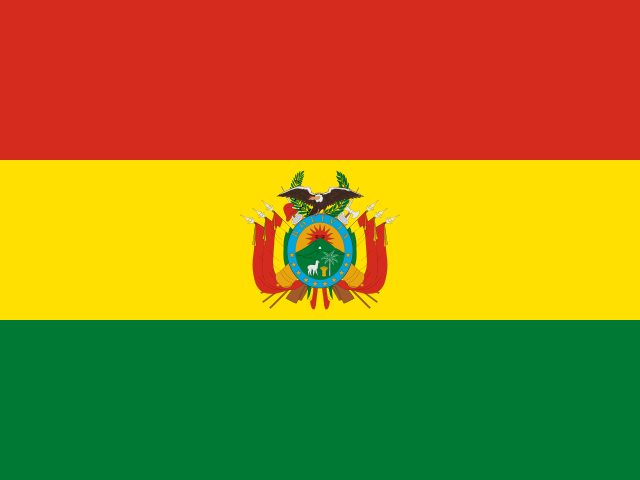
Ask a room full of quiz fans for the capital of Bolivia and you will start an argument. Half will say La Paz. The other half will insist on Sucre. Both groups are right, and that is exactly what makes Bolivia one of the trickiest questions in world geography.
Bolivia’s constitution names Sucre as the capital. But the president, the government ministries and the national parliament all work in La Paz, almost 400 km away by road. Sucre keeps the country’s highest courts. So depending on what you mean by “capital”, you can point to either city.
Sucre: the historic capital
Sucre sits in the southern highlands at about 2,800 metres above sea level. It was founded by the Spanish in 1538, and over the centuries it has been known by several names, including La Plata, Charcas and Chuquisaca. During colonial times it was an important centre of law, religion and learning, with one of the oldest universities in the Americas.
When Bolivia declared independence in 1825, the new republic’s first steps were taken here. The city was later renamed in honour of Antonio José de Sucre, a hero of the independence wars and one of Bolivia’s first presidents. Its whitewashed colonial centre is so well preserved that UNESCO listed it as a World Heritage Site in 1991.
La Paz: the city that took over
In the 1800s, the balance of power in Bolivia slowly shifted north. La Paz grew quickly as trade, mining and transport expanded around Lake Titicaca and the Andean plateau. Rich tin and silver deposits made the region around La Paz and Oruro the country’s economic engine, while Sucre remained the political and legal centre.
The rivalry came to a head in a short civil war in 1898 and 1899, often called the Federal War. On one side were the Conservatives, based in Sucre; on the other, the Liberals, based in La Paz. The Liberals won, and afterwards the president and the legislature moved to La Paz. Sucre kept its title as the official capital and the seat of the judiciary. The compromise has lasted more than a century.
The world’s highest seat of government
La Paz is a remarkable place to run a country from. The city fills a deep canyon on the edge of the Altiplano, with the centre sitting at about 3,600 metres above sea level. That makes it the highest seat of government in the world. Its airport, in the neighbouring city of El Alto, lies at around 4,000 metres, so visitors often feel the thin air the moment they step off the plane.
Getting around such a steep city is a challenge. Since 2014, La Paz and El Alto have been connected by Mi Teleférico, a network of urban cable cars that carries commuters over the rooftops. It is one of the largest cable car systems used for public transport anywhere in the world.
Bolivia is not alone
Several countries split their capital functions between cities, or have an official capital that is not where the government actually works.
South Africa has three capitals: Pretoria for the executive, Cape Town for parliament and Bloemfontein for the judiciary. In the Netherlands, Amsterdam is the capital, but the government and parliament sit in The Hague. Malaysia’s capital is Kuala Lumpur, while many government offices have moved to the planned city of Putrajaya. Côte d’Ivoire’s official capital is Yamoussoukro, but its largest city and economic hub is Abidjan. In Benin, Porto-Novo is the official capital while much of the government works in Cotonou.
Each of these cases has its own history, but the pattern is similar: an older, symbolic capital and a newer, practical centre of power.
How to answer the quiz question
If a question asks for Bolivia’s constitutional capital, the answer is Sucre. If it asks where the government sits, it is La Paz. Many quizzes accept either, but it is worth knowing both, because the best questions are designed to catch people who only know one.
A good way to remember it: Sucre is the city of the constitution and the courts, La Paz is the city of the president and parliament. One holds the history, the other holds the power.
Visiting the two capitals
For travellers, the two cities feel very different. Sucre is calm, white and colonial, with plazas, churches and a pleasant climate that has earned it the nickname “the white city”. La Paz is busy, steep and dramatic, with markets climbing the hillsides and the snow-capped peak of Illimani towering above the city. Many visitors to Bolivia see both, and quickly understand why each one feels like the heart of the country in its own way.
Ready to test your capitals? Try Guess the Capital, then look out for Bolivia, South Africa and the Netherlands in our capital games: they are the ones that trip up even experienced players.