Some capital cities are easy: Paris, Tokyo, Cairo. Others catch out almost everyone because the capital is not the biggest or most famous city in the country. Here are 15 capitals that regularly trip people up, with a short story for each to help you remember.
1. Australia: Canberra
Not Sydney, not Melbourne. When Australia became a federation in 1901, Sydney and Melbourne both wanted to be the capital. The compromise was to build a brand-new city between them. Canberra was chosen in 1908, designed by the American architects Walter Burley Griffin and Marion Mahony Griffin, and parliament moved there in 1927.
2. Canada: Ottawa
Not Toronto or Montreal. Queen Victoria chose Ottawa in 1857. It sat on the border between English-speaking Ontario and French-speaking Quebec and was further from the United States than the other candidates, which made it a safer and more balanced choice.
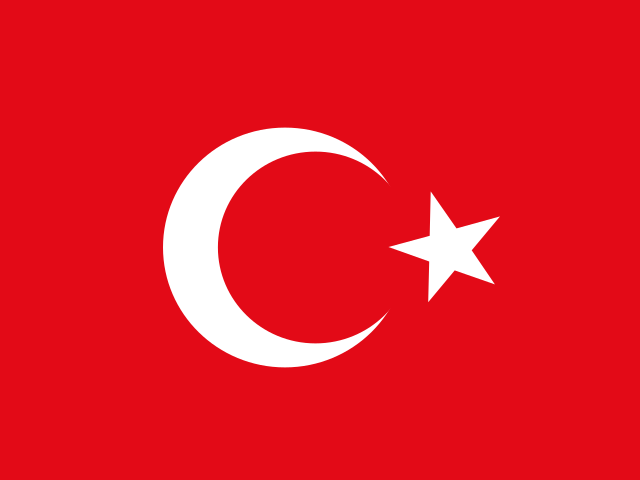
3. Turkey: Ankara
Istanbul is the largest city and was the capital of the Ottoman Empire for centuries. But when the Republic of Turkey was founded in 1923, Mustafa Kemal Atatürk made Ankara the capital. It was central, easier to defend and a symbol of a new beginning.
4. Brazil: Brasília
Not Rio de Janeiro or São Paulo. Brazil built Brasília from scratch in the interior and moved the capital there from Rio in 1960. The idea was to develop the centre of the country. The city was planned by Lúcio Costa, with buildings by Oscar Niemeyer, and from above its layout is often compared to an aeroplane.
5. Switzerland: Bern
Zurich and Geneva are better known internationally, but the Swiss government sits in Bern. Switzerland’s constitution does not actually name a capital; Bern is officially the “federal city”, a choice made in 1848.
6. Nigeria: Abuja
Lagos is Nigeria’s largest city and was its capital until 1991. Abuja was chosen in the 1970s because it is near the centre of the country and seen as neutral ground between Nigeria’s major regions and ethnic groups.
7. Pakistan: Islamabad
Karachi was Pakistan’s first capital. In the 1960s the capital moved to Islamabad, a planned city built next to Rawalpindi at the foot of the Margalla Hills, chosen for its central location and pleasant climate.
8. Myanmar: Naypyidaw
In 2005 and 2006, Myanmar’s government moved the capital from Yangon to Naypyidaw, a new city built in the centre of the country. It is known for its enormous, often almost empty highways.
9. Kazakhstan: Astana
Kazakhstan moved its capital from Almaty to Astana in 1997. The city has changed name several times: it was called Akmola, then Astana, then Nur-Sultan from 2019, and returned to Astana in 2022. That makes it a favourite trick question.
10. Tanzania: Dodoma
Dar es Salaam is Tanzania’s largest city and main port, and many government offices were there for decades. Dodoma was named the capital in the 1970s, and the government has been moving there steadily since.
11. Côte d’Ivoire: Yamoussoukro
Abidjan is the economic heart of the country, but Yamoussoukro, the hometown of the first president Félix Houphouët-Boigny, became the official capital in 1983. It is home to one of the largest churches in the world, the Basilica of Our Lady of Peace.
12. Morocco: Rabat
Casablanca is bigger and Marrakesh is more famous with travellers, but Rabat is the capital. It is also where the king’s main palace and the parliament are located.
13. New Zealand: Wellington
Auckland is the largest city by far, but Wellington became the capital in 1865. It was chosen because it sits near the centre of the country, between the North and South Islands, making it easier to reach from both.
14. Vietnam: Hanoi
Ho Chi Minh City, formerly Saigon, is larger and was the capital of South Vietnam. After reunification in 1976, Hanoi in the north became the capital of the whole country.
15. Bolivia: Sucre and La Paz
Bolivia has two answers. Sucre is the constitutional capital and home of the judiciary, while La Paz is the seat of government. We explain how that happened in our article on Bolivia’s two capitals.
How to remember them
Most tricky capitals follow one of a few patterns: a compromise between two rival cities (Canberra, Ottawa), a brand-new planned capital (Brasília, Abuja, Islamabad, Naypyidaw), or a symbolic move after a big change in history (Ankara, Hanoi). Recognise the pattern and the answer becomes a story instead of a random fact.
A final tip: in a quiz, when the answer that comes to mind first is a famous, huge city, pause for a second. Ask yourself whether the country might have chosen a smaller, more central or newer city instead. That small pause catches most of the traps on this list.
Ready? Try Guess the Capital, then take on Capital Countdown to see how many of these you can name against the clock.